Waggish

David Auerbach on literature, tech, film, etc.

Page 52 of 148

Paul Krugman Sums it Up

When I was young and naive, I believed that important people took positions based on careful consideration of the options. Now I know better. Much of what Serious People believe rests on prejudices, not analysis. And these prejudices are subject to fads and fashions.

Myths of Austerity

I remember those days….

My Secret Science Fiction Past

Perhaps not so secret, but I was raised on the stuff and so I’ve read far more of it than I might have had I been born into a different environment. This list of Gollancz “classics” is going around, and modulo its omissions and overinclusions due to rights issues and the like, it’s got a fair amount of good stuff on it. And some less good stuff. (It overlaps a great deal with David Pringle’s list, and gives similar overweighting to British writers…which is probably not a bad thing.) But if I’m a fan of any genre (that’s not literary modernism, that is), it would have to be sf. So I figure I should engage in an exercise like this from time to time.

I bold it if I’ve read it. I italicize it if I liked it and still like it today. I could go more deeply into degrees of liking vs. respecting vs. enjoying, but I’ll leave it at this.

I – Dune – Frank Herbert
II – The Left Hand of Darkness – Ursula K. Le Guin
III – The Man in the High Castle – Philip K. Dick
IV – The Stars My Destination – Alfred Bester
V – A Canticle for Leibowitz – Walter M. Miller, Jr.

VI – Childhood’s End – Arthur C. Clarke
VII – The Moon Is a Harsh Mistress – Robert A. Heinlein
VIII – Ringworld – Larry Niven
IX – The Forever War – Joe Haldeman
X – The Day of the Triffids – John Wyndham

1 – The Forever War – Joe Haldeman
2 – I Am Legend – Richard Matheson
3 – Cities in Flight – James Blish
4 – Do Androids Dream of Electric Sheep? – Philip K. Dick
5 – The Stars My Destination – Alfred Bester
6 – Babel-17 – Samuel R. Delany
7 – Lord of Light – Roger Zelazny
8 – The Fifth Head of Cerberus – Gene Wolfe
9 – Gateway – Frederik Pohl
10 – The Rediscovery of Man – Cordwainer Smith

11 – Last and First Men – Olaf Stapledon
12 – Earth Abides – George R. Stewart
13 – Martian Time-Slip – Philip K. Dick

14 – The Demolished Man – Alfred Bester
15 – Stand on Zanzibar – John Brunner
16 – The Dispossessed – Ursula K. Le Guin
17 – The Drowned World – J. G. Ballard
18 – The Sirens of Titan – Kurt Vonnegut

19 – Emphyrio – Jack Vance
20 – A Scanner Darkly – Philip K. Dick
21 – Star Maker – Olaf Stapledon

22 – Behold the Man – Michael Moorcock
23 – The Book of Skulls – Robert Silverberg
24 – The Time Machine and The War of the Worlds – H. G. Wells
25 – Flowers for Algernon – Daniel Keyes
26 – Ubik – Philip K. Dick
27 – Timescape – Gregory Benford
28 – More Than Human – Theodore Sturgeon
29 – Man Plus – Frederik Pohl
30 – A Case of Conscience – James Blish

31 – The Centauri Device – M. John Harrison
32 – Dr. Bloodmoney – Philip K. Dick

33 – Non-Stop – Brian Aldiss
34 – The Fountains of Paradise – Arthur C. Clarke
35 – Pavane – Keith Roberts
36 – Now Wait for Last Year – Philip K. Dick

37 – Nova – Samuel R. Delany
38 – The First Men in the Moon – H. G. Wells
39 – The City and the Stars – Arthur C. Clarke
40 – Blood Music – Greg Bear

41 – Jem – Frederik Pohl
42 – Bring the Jubilee – Ward Moore
43 – VALIS – Philip K. Dick
44 – The Lathe of Heaven – Ursula K. Le Guin
45 – The Complete Roderick – John Sladek
46 – Flow My Tears, the Policeman Said – Philip K. Dick
47 – The Invisible Man – H. G. Wells
48 – Grass – Sheri S. Tepper
49 – A Fall of Moondust – Arthur C. Clarke
50 – Eon – Greg Bear

51 – The Shrinking Man – Richard Matheson
52 – The Three Stigmata of Palmer Eldritch – Philip K. Dick
53 – The Dancers at the End of Time – Michael Moorcock
54 – The Space Merchants – Frederik Pohl and Cyril M. Kornbluth
55 – Time Out of Joint – Philip K. Dick
56 – Downward to the Earth – Robert Silverberg
57 – The Simulacra – Philip K. Dick
58 – The Penultimate Truth – Philip K. Dick
59 – Dying Inside – Robert Silverberg
60 – Ringworld – Larry Niven

61 – The Child Garden – Geoff Ryman
62 – Mission of Gravity – Hal Clement
63 – A Maze of Death – Philip K. Dick
64 – Tau Zero – Poul Anderson
65 – Rendezvous with Rama – Arthur C. Clarke
66 – Life During Wartime – Lucius Shepard
67 – Where Late the Sweet Birds Sang – Kate Wilhelm
68 – Roadside Picnic – Arkady and Boris Strugatsky
69 – Dark Benediction – Walter M. Miller, Jr.
70 – Mockingbird – Walter Tevis

71 – Dune – Frank Herbert
72 – The Moon Is a Harsh Mistress – Robert A. Heinlein
73 – The Man in the High Castle – Philip K. Dick
74 – Inverted World – Christopher Priest
75 – Kurt Vonnegut – Cat’s Cradle
76 – H.G. Wells – The Island of Dr. Moreau

77 – Arthur C. Clarke – Childhood’s End
78 – H.G. Wells – The Time Machine
79 – Samuel R. Delany – Dhalgren (July 2010)
80 – Brian Aldiss – Helliconia (August 2010)

81 – H.G. Wells – Food of the Gods (Sept. 2010)
82 – Jack Finney – The Body Snatchers (Oct. 2010)
83 – Joanna Russ – The Female Man (Nov. 2010)
84 – M.J. Engh – Arslan (Dec. 2010)

I’m only torn over Hal Clement, who is brilliant at what he does, but what he does well is not “fiction” per se. Ballard and Gene Wolfe (yes, really!) deserve more entries, probably in lieu of the excess of Dick.

A few more genre authors who really should be on the list: Thomas Disch, Richard McKenna, R.A. Lafferty, Russell Hoban (for Riddley Walker, of course), Stanislaw Lem, Mark Geston, Michael Swanwick, James Tiptree, Carol Emshwiller, Iain Banks, John Crowley, Octavia Butler, Robert Charles Wilson (Spin was the best genre-SF novel I’d read in ages). There are other big names missing, but, offhand, no one comes to mind that I would want to read again.
Bill Douglas: My Ain Folk

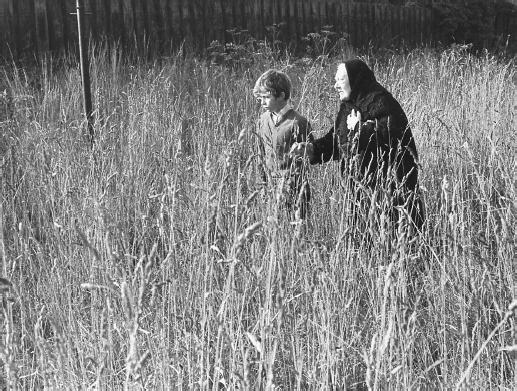
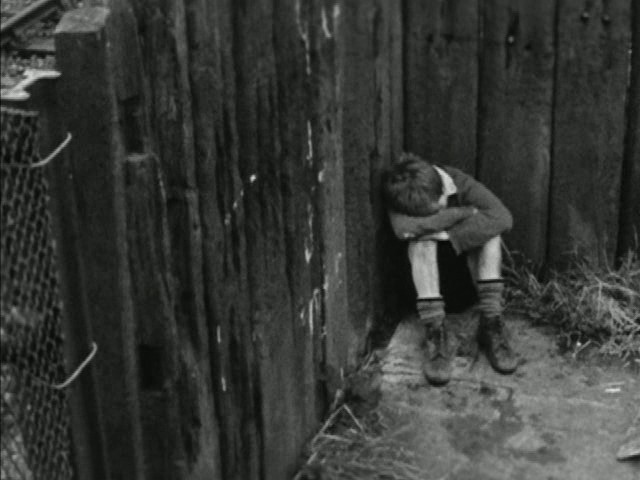
This is the second part of Douglas’s three-part trilogy about his childhood, and generally the best known, though the whole thing has now been released on DVD. It’s black and white, stark, restrained, and depressing. I get the sense that there is a particularly Scottish brand of melancholy that Douglas’s film represents, but since my familiarity with Scotland encompasses Alasdair Gray, James Kelman, Postcard Records, and the Dog-Faced Hermans, I find it hard to draw any serious conclusions. But I can’t believe that Lynne Ramsay didn’t have it in mind 25 years later when making her own excursion into dark Scottish childhood, Ratcatcher, a movie so dour I remembered it being in black and white even though it’s not.

But though the experiences chronicled in My Ain Folk are ghastly and grotesque, the style is more remarkable than the content. Though our boy hero is oppressed, abused, and abandoned, there’s not much to distinguish his adventures from those of the young children of Pialat, Bresson, and Truffaut. But I don’t know of any English-language movie of the time with a style like Douglas’s.

My Ain Folk

Though there’s some visual spillover from the Angry Young Men movies of John Schlesinger (Billy Liar and its run-down, dead village especially), Douglas goes for a much chillier and detached continental tone, and he’s remarkably successful. With next to no camera movement, he tends to shoot static tableaux from high and oblique angles. There’s minimal action, quite literally. Even when people are speaking, they do so holding themselves very still. So the movie reminds me of Bresson, of course, but also of Antonioni and Pasolini, even though the base material is drastically different. Bresson never shot such a filthy, working-class film. And Douglas adjusts his style to bring out the most of the cramped quarters he shoots in. The 4:3 ratio really helps this; this film and its visuals would not have worked in 16:9 at all, so I greatly credit Douglas’s eye.

Freeze, Die, Rise Again!

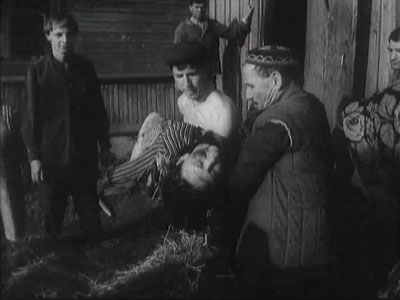
Its closest sibling might be the Vitali Kanevsky’s amazing Freeze, Die, Rise Again, which creates a similar claustrophobia around its wretched Siberian mining town. But Douglas shies away from the direct empathy that Kanevsky provokes, and so removes all catharsis and a great deal of apparent realism. I think this is an achievement, but it makes for a cold movie that resists easy empathy…which I assume was Douglas’s point. It shouldn’t be too easy to identify with or love the unfortunate–or else they wouldn’t be unfortunate. These characters are far harder to love than Mouchette or any of the Dardennes’ protagonists. I’m surprised the “slow film” aficionados haven’t picked up on Douglas yet (hi Lars! hi Steve!), because I think Douglas deserves a place right up there with Tarr (there’s an uncanny similarity, in fact) and the rest.

Keith Thomas on Research and Notetaking

Keith Thomas wrote, among other things, Religion and the Decline of Magic, which, like all his books, is a monstrous, almost Robert Burton-ish, tome of obscure facts carefully arranged. I found his reflections on his working methods to be touching and, I think, humble:

When I go to libraries or archives, I make notes in a continuous form on sheets of paper, entering the page number and abbreviated title of the source opposite each excerpted passage. When I get home, I copy the bibliographical details of the works I have consulted into an alphabeticised index book, so that I can cite them in my footnotes. I then cut up each sheet with a pair of scissors. The resulting fragments are of varying size, depending on the length of the passage transcribed. These sliced-up pieces of paper pile up on the floor. Periodically, I file them away in old envelopes, devoting a separate envelope to each topic. Along with them go newspaper cuttings, lists of relevant books and articles yet to be read, and notes on anything else which might be helpful when it comes to thinking about the topic more analytically. If the notes on a particular topic are especially voluminous, I put them in a box file or a cardboard container or a drawer in a desk. I also keep an index of the topics on which I have an envelope or a file. The envelopes run into thousands.

The truth is that I have become something of a dinosaur. Nowadays, researchers don’t need to read early printed books laboriously from cover to cover. They have only to type a chosen word into the appropriate database to discover all the references to the topic they are pursuing. I try to console myself with the reflection that they will be less sensitive to the context of what they find and that they will certainly not make the unexpected discoveries which come from serendipity. But the sad truth is that much of what it has taken me a lifetime to build up by painful accumulation can now be achieved by a moderately diligent student in the course of a morning. Moreover, today’s historians don’t make notes on pieces of paper. They have computer programs for filing and indexing. Even as I write, an email message informs me that ‘wiki software can be used to develop a personal research knowledge base.’ My methods are in no way an advance on those of Burckhardt and now appear impossibly archaic. But it is far too late to think of transferring this accumulation onto some electronic database. When I look at my cellar, stuffed with cardboard boxes and dog-eared folders, and littered with loose slips which have broken free from overstuffed envelopes, I envy my colleagues who travel light, with their laptops and digital cameras. But, as Gibbon said, where error is irreparable, repentance is useless.

Yet as I pick my way through my accumulation of handwritten material, I don’t feel depressed. The thousands of used envelopes themselves give me a good deal of nostalgic pleasure; they remind me of old friends, of institutions with which I have been associated and of the secondhand booksellers who have sent me catalogues over the years. Admittedly, they also remind me of many false starts: topics I began on, tired of or discovered were being written up by somebody else. But that is a challenge to reorder my materials as the world moves on and my interests change. In his essay ‘On Intellectual Craftsmanship’, appended to his The Sociological Imagination (1959), C. Wright Mills reassuringly remarks that ‘the way in which these categories change, some being dropped and others being added, is an index of your intellectual progress … As you rearrange a filing system, you often find that you are, as it were, loosening your imagination.’

Keith Thomas

Rebecca West on Sentimentality

But the sentimental artist is becoming nothing, he has ears, he has eyes, he is being intelligent, he is playing a game, he is moving certain objects according to certain rules in front of spectators. Those objects one may take as the isolated units of his material which he has passed through his imagination by an unfortunately discontinuous process. He sees that one of these objects occupies a certain position on the ground, and knows that he will score a point if he can remove it to another position; he therefore sends another of these objects rolling along to displace it. Shock…one hears that ugly sound.

Rebecca West, “That Strange Necessity”

Impossible for me not to think immediately of my beloved Musil essay Black Magic:

In a somewhat less propitious time, the poet X would have become a popular hack on a family magazine. He would then have presupposed that the heart always responds to certain situations with the same set feelings. Noble-mindedness would always have been recognizably noble, the abandoned child lamentable, and the summer landscape stirring. Notice that in this way, a firm, clearcut, and immutable relationships would have been established between the feelings and the words, true to the nature of the term kitsch. Thus kitsch, which prides itself so much on sentiment, turns sentiment into concepts.

As a function of the times, however, X, instead of being a good family magazine hack, has become a bad Expressionist. Consequently, his work causes intellectual short-circuiting. He appeals to Man, God, the Spirit, Goodness, Chaos; and out of such big words he squeezes his sophisticated sentences. He could not possibly do so, were he to imagine the totality of their meaning, or at least grasp their utter unimaginability. But long before his time, these words had already taken on connotations meaningful and meaningless, in books and newspapers; our Expressionist has often seen them wedged together, and the words need only be loaded with the least little bit of significance for him to perceive sparks flying between them. This, however, is only a consequence of the fact that he had not learned how to think based on the experience of his own imagination, but rather, with the aid of borrowed terms.

Robert Musil

I like West’s mechanistic cause-and-effect imagery, though; it invokes the sheer cheapness of the devices employed and the effects achieved. That the slightest variation in the manipulation of these objects (and concomitant alteration in surface effect) is applauded as an innovation: this indicates the creative impoverishment of the whole culture surrounding an artistic scene, as fake innovation is taken for real innovation and real innovation is taken for flawed aberration. (Such was the case with techno sub-genres in the 1990s; the best stuff was at the fringes and mostly ignored as people leapt to anoint new scene-leaders.) This has been a noticeable downside to genre-beholden literature like mysteries and science-fiction, where the task was explicitly to conceive of new variations within a preconceived structure (does anyone remember that Columbo episode where the killer himself is murdered?), but we can be assured the same goes for literary fiction as well. There’s just more effort being made to disguise the circuitous variations as stunning advances in form and content. Good thing we have short memories….

« Older posts Newer posts »

© 2026 Waggish

Theme by Anders NorenUp ↑